5 wrong myths about Domain Authority 🧐
Crazy how much misinformation I read on Twitter about Domain Rating (DR).
Quick terminology note: Ahrefs calls its metric Domain Rating (DR). Moz calls its metric Domain Authority (DA). In this post, I use "domain authority" as the generic concept and DR when I mean Ahrefs' number.
Here are the five misconceptions I keep seeing.
Myth 1: A do-follow backlink from a high DR site will increase my own DR
Wrong.
Example: Product Hunt has a very high DR. But getting a backlink from Product Hunt can have zero impact on your own DR. I checked hundreds of domains and could not find a Product Hunt backlink that moved DR by itself.
Why?
Because Product Hunt has too many outgoing links. A high-DR link only moves your own DR when the linking domain does not link out to too many other unique domains.
That is also how Ahrefs explains the mechanics: the value passed from a linking domain is roughly divided by the number of unique domains it links to.
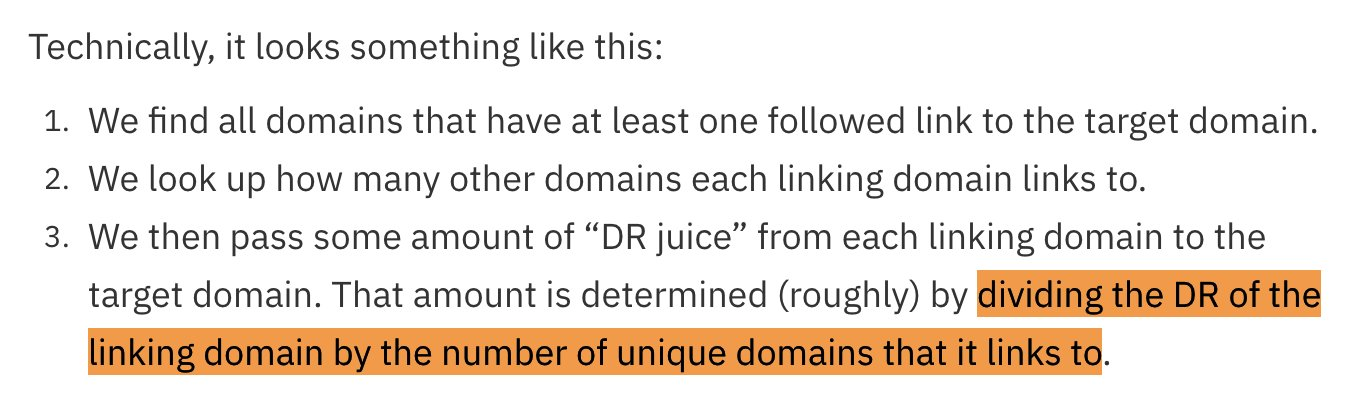
The takeaway is not "high DR links are useless." The takeaway is: outgoing link count matters.
Myth 2: A higher DR means that I'll rank higher on Google
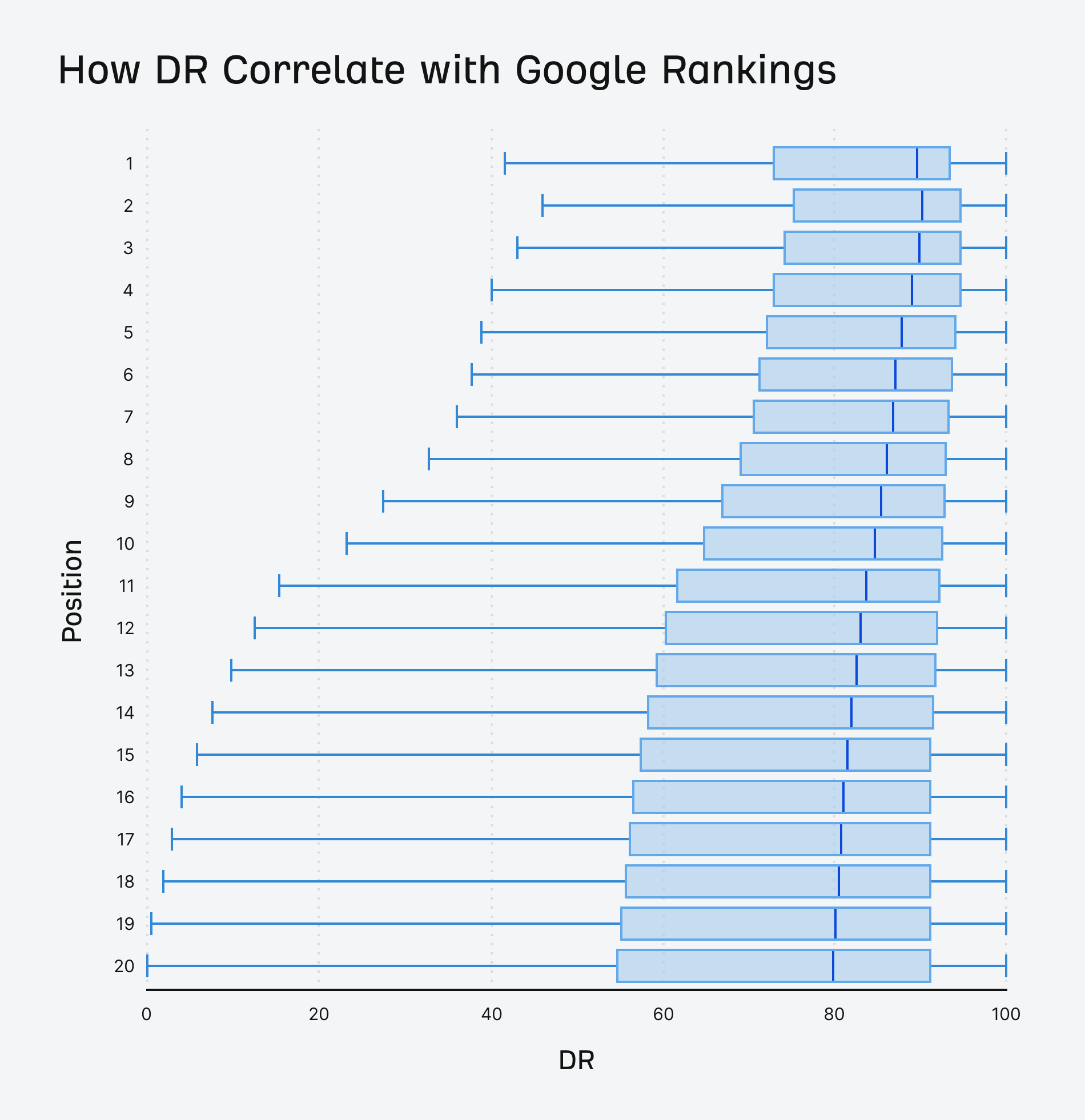
Kind of. But DR is only one of many signals.
The first result on Google is not always the one with the highest DR. Check this with the keywords you want to rank for: you will often find lower-DR sites above higher-DR sites.
Other factors can outweigh DR:
- topical relevance
- search intent match
- page-level authority
- internal links
- content quality
- freshness
- user signals
- brand and entity strength
This is why DR correlates with rankings, but it is not the same thing as rankings.
Myth 3: There's no such thing as Domain Authority, only Page Authority
Google has publicly denied using a simple public-facing "domain authority" score.
But the 2024 Google SEO leak showed something SEO experts had already seen in experiments: Google has concepts that look like domain-level or site-level authority.
The leaked documentation included a siteAuthority field:
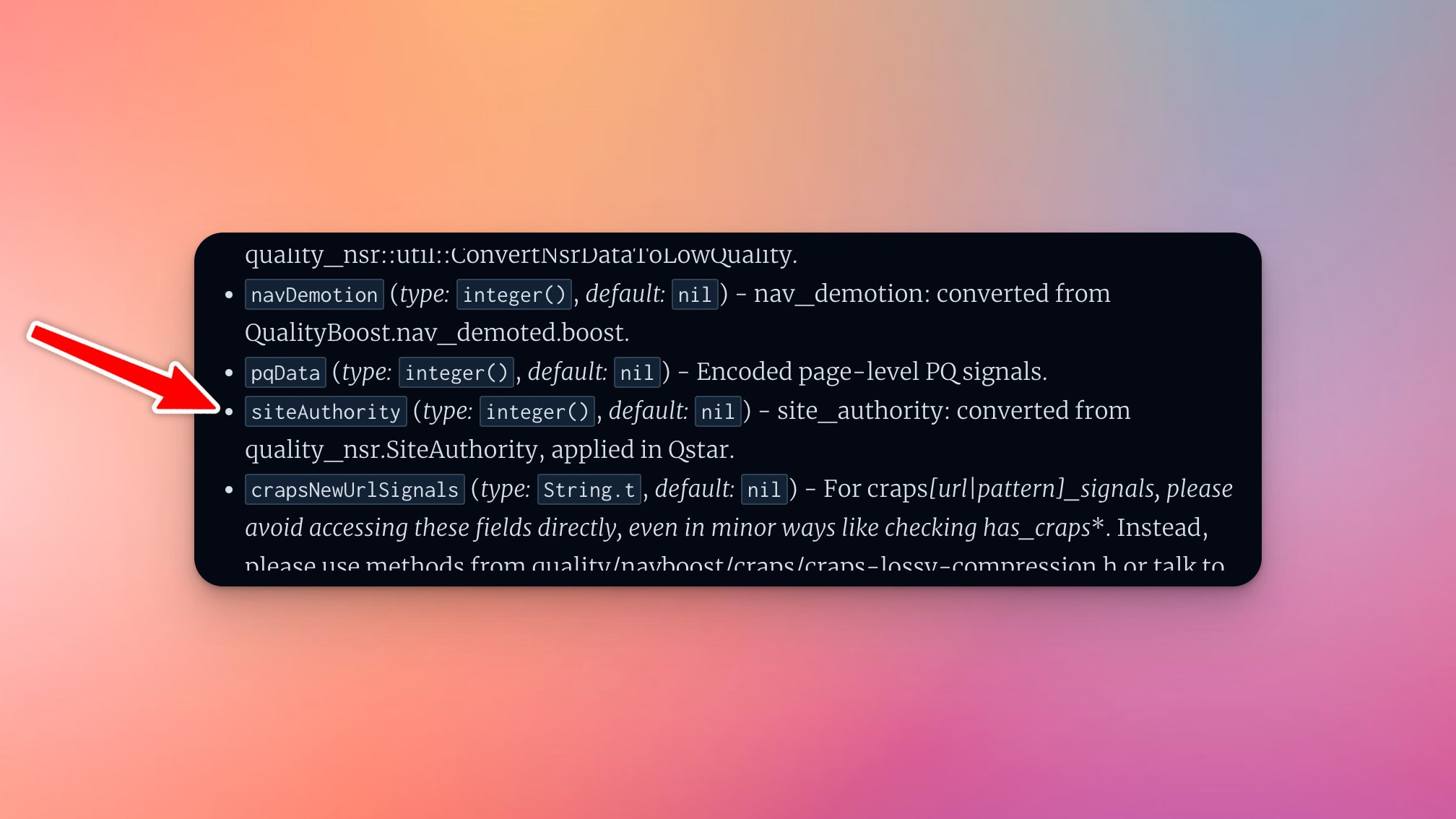
This does not mean Ahrefs DR is Google's exact internal metric. It means the idea of site-level authority is real enough that you should not ignore it.
Myth 4: Ahrefs' DR is the official Google ranking
Wrong.
Google does not reveal a public Domain Rating. Google revealed Toolbar PageRank until 2016, but that was retired years ago.
Ahrefs, Semrush, and Moz each have their own authority metrics. They are useful because they approximate link strength from their own crawled link graphs, but they are not official Google numbers.
That means two things:
- You should not treat DR as truth.
- You should not ignore DR either.
Use DR as a quick proxy, then inspect the backlink profile behind it.
Myth 5: Ahrefs' DR is safe from link farming
Wrong.
You can pay someone on Fiverr to link your domain from a link farm and make your DR jump to 70+. That is black-hat SEO and can have bad consequences for your Google rankings.
Always take Ahrefs' DR with a grain of salt. It is easy to spot link farms when you inspect referring domains:
- the sites have no real traffic
- the domains link to unrelated industries
- the pages are thin or auto-generated
- the anchor text looks artificial
- hundreds or thousands of external links appear across the same templates
DR is useful, but it is only useful when you understand what is underneath it.


How to correctly register on LinkedIn, Facebook, CrunchBase, etc. to signal Google that your website is alive and is about a product or brand

What is better for SEO: subdomains or subdirectories? Does it even make a difference?